Interesting Factoids ...

   #1  

lykuno

Verified VCDS User
Verified
Joined
Mar 2, 2014
Messages
701
Reaction score
1,309
Location
USA
VCDS Serial number
C?ID=28921
You may have noticed there isn't a topic in the Uwe's Bar forum section dedicated solely to "factoids". A forum search of threads in "Uwe's Bar" reveals that the word "factoid" is mentioned in a total of 3 separate posts, out of a current total of 967 threads / 33.1K Messages:
* Sell me on EVs.... VAG or otherwise...
* Random Videos
* Australian Royal Subjects

That little factoid above stated, I thought it might be fun, entertaining and informative to create a new thread here in Uwe's Bar dedicated to "Interesting Factoids". Contributions from the Members/Patrons of the Bar are welcome and encouraged! Content submitted should follow the simple definitions listed below.

Lastly, the Ross-Tech Terms and Rules for posting content apply, as always.

factoid /făk′toid/ (The American Heritage® Dictionary of the English Language, 5th Edition)

noun​

  1. A piece of unverified or inaccurate information that is presented in the press as factual, often as part of a publicity effort, and that is then accepted as true because of frequent repetition.
  2. A brief, somewhat interesting fact.
  3. An inaccurate statement or statistic believed to be true because of broad repetition, especially if cited in the media.
  4. An interesting item of trivia.
  5. Something resembling a fact; unverified (often invented) information that is given credibility because it appeared in print.
  6. A brief (usually one sentence and usually trivial) news item.
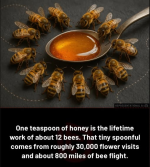
Here's a relevant example to kick this thread off ...

bees.png
 
   #2  

BlueR32

Verified VCDS User
Verified
Joined
Apr 26, 2016
Messages
1,178
Reaction score
620
Location
USA
VCDS Serial number
C?ID=58325
89.6% of all claimed FACTOIDS are false. :D Maybe they should change the word to: FAKEtoids???
 
   #3  

lykuno

Verified VCDS User
Verified
Joined
Mar 2, 2014
Messages
701
Reaction score
1,309
Location
USA
VCDS Serial number
C?ID=28921

An interesting factoid.​


The St. Patrick’s Day Parade in New York is 14 years older than our country, dating to 1762.
 
Last edited:
   #4  

lykuno

Verified VCDS User
Verified
Joined
Mar 2, 2014
Messages
701
Reaction score
1,309
Location
USA
VCDS Serial number
C?ID=28921

Interesting fact: When Orville Wright died, Neil Armstrong was already 17 years old.​


Orville: August 19, 1871 – January 30, 1948

Neil: August 5, 1930 – August 25, 2012

Factoid via American Digest
 
Last edited:
   #5  

lykuno

Verified VCDS User
Verified
Joined
Mar 2, 2014
Messages
701
Reaction score
1,309
Location
USA
VCDS Serial number
C?ID=28921

Weird to think of this ...​

Cleopatra's time was closer to the iPhone era than to the building of Giza's Pyramid. This fact sounds fake but is actually true; the great pyramid of giza was constructed 2560 BC. Cleopatra the last pharoah ruled till 30 BC, 2500 years after the construction of the great pyramid.​

 
Last edited:
   #6  

lykuno

Verified VCDS User
Verified
Joined
Mar 2, 2014
Messages
701
Reaction score
1,309
Location
USA
VCDS Serial number
C?ID=28921

In practical application, math can in fact be quite interesting.​


As an example, the Fibonacci numbers are the numbers in the following integer sequence, called the Fibonacci sequence, and characterized by the fact that every number in it is the sum of the two preceding ones:

1,\;1,\;2,\;3,\;5,\;8,\;13,\;21,\;34,\;55,\;89,\;144,\;\ldots \;


Fibonacci numbers appear unexpectedly often in mathematics, so much so that there is an entire journal dedicated to their study, the Fibonacci Quarterly. Applications of Fibonacci numbers include computer algorithms such as the Fibonacci search technique and the Fibonacci heap data structure, and graphs called Fibonacci cubes used for interconnecting parallel and distributed systems.

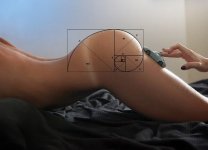
They also appear in biological settings. The Fibonacci spiral: an approximation of the golden spiral created by drawing circular arcs connecting the opposite corners of squares in the Fibonacci tiling; this one uses squares of sizes 1, 1, 2, 3, 5, 8, 13, 21, and 34. Yes, biological settings, Hmmm.

Fibonacci Spiral.jpg
 
   #7  

lykuno

Verified VCDS User
Verified
Joined
Mar 2, 2014
Messages
701
Reaction score
1,309
Location
USA
VCDS Serial number
C?ID=28921
Courtesy of the BBC Science Focus Magazine:

(Part 1) ...

  • A cloud weighs around a million tonnes. A cloud typically has a volume of around 1km3 and a density of around 1.003kg per m3 – that's a density that’s around 0.4 per cent lower than the air surrounding it (this is how they are able to float).

  • Giraffes are 30 times more likely to get hit by lightning than people. True, there are only five well-documented fatal lightning strikes on giraffes between 1996 and 2010. But due to the population of the species being just 140,000 during this time, it makes for about 0.003 lightning deaths per thousand giraffes each year. This is 30 times the equivalent fatality rate for humans.

  • Identical twins don’t have the same fingerprints. You can’t blame your crimes on your twin, after all. This is because environmental factors during development in the womb (umbilical cord length, position in the womb, and the rate of finger growth) affect your fingerprint.

  • Earth’s rotation is changing speed. It's actually slowing. This means that, on average, the length of a day increases by around 1.8 seconds per century. 600 million years ago a day lasted just 21 hours.

  • Earlobes have no biological purpose. While they are rich in nerve endings and may play a role in social bonding, many scientists argue that earlobes don’t have any true biological purpose.

  • Your brain is constantly eating itself. This process is called phagocytosis, where cells envelop and consume smaller cells or molecules to remove them from the system. Don’t worry! Phagocytosis isn't harmful, but actually helps preserve your grey matter.

  • The largest piece of fossilised dinosaur poo discovered is over 30cm long and over two litres in volume. Believed to be a Tyrannosaurus rex turd, the fossilised dung (also named a 'coprolite') is helping scientists better understand what the dinosaur ate.

  • Mars isn’t actually round. Unlike any other rocky planet in the Solar System, Mars is actually shaped like a rugby ball, but with different sizes along all three axes.

  • There’s no such thing as zero-calorie foods. Even low-calorie foods, such as celery and watercress, contain more energy than the body needs to process them.

  • The Universe's average colour is called 'Cosmic latte'. In a 2002 study, astronomers found that the light coming from galaxies averaged into a beige colour that’s close to white.

  • Animals can experience time differently from humans. To smaller animals, the world around them moves more slowly compared to humans. Salamanders and lizards, for example, experience time more slowly than cats and dogs. This is because the perception of time depends on how quickly the brain can process incoming information.

  • Water might not be wet. This is because most scientists define wetness as a liquid’s ability to maintain contact with a solid surface, meaning that water itself is not wet, but can make other objects wet.

  • Most people stroke cats the wrong way. Research shows they often just tolerate it for the food and attention. The safest spots? Under the chin, cheeks and base of the ears. The worst? Their belly and the base of their tail – touch there and you’re more likely to annoy them than bond with them.

  • A chicken once lived for 18 months without a head.Mike the chicken's incredible feat was recorded back in the 1940s in the USA. He survived as his jugular vein and most of his brainstem were left mostly intact, ensuring just enough brain function remained for survival. In the majority of cases, a headless chicken dies in a matter of minutes.

  • The raw ingredients of a human body would cost over £116,000. But if you’re prepared to do the refining yourself, a body could cost a lot less – under £100 in fact.

  • All the world’s bacteria stacked on top of each other would stretch for 10 billion light-years. Together, Earth's 0.001mm-long microbes could wrap around the Milky Way over 20,000 times.

  • Wearing a tie can reduce blood flow to the brain by 7.5 per cent. A study in 2018 found that wearing a necktie can reduce the blood flow to your brain by up to 7.5 per cent, which can make you feel dizzy, nauseous and cause headaches. They can also increase the pressure in your eyes if on too tight and are great at carrying germs.

  • The fear of long words is called Hippopotomonstrosesquippedaliophobia. The 36-letter word was first used by the Roman poet Horace in the first century BCE to criticise those writers with an unreasonable penchant for long words. It was American poet Aimee Nezheukumatathil, possibly afraid of their own surname, who coined the term how we know it in 2000.

  • The world’s oldest dog lived to 29.5 years old. While the median age a dog reaches tends to be about 10-15 years, one Australian cattle dog, ‘Bluey’, survived to the ripe old age of 29.5.

  • The world’s oldest cat lived to 38 years and three days old. Creme Puff was the oldest cat to ever live.

  • The Sun makes a sound but we can't hear it. In the form of pressure waves, the Sun does make a sound. The wavelength of the pressure waves from the Sun is measured in hundreds of miles, however, meaning they are far beyond the range of human hearing.

  • Mount Everest isn't the tallest mountain on Earth. Mauna Kea and Mauna Loa in Hawaii, the twin volcanoes, are taller than Mount Everest as 4.2km of their height is submerged underwater. The twin volcanoes measure a staggering 10.2km in total, compared to Everest’s paltry 8.8km.

  • Our solar system has a wall. The heliopause – the region of space in which solar wind isn’t hot enough to push back the wind of particles coming from distant stars – is often considered the “boundary wall” of the Solar System and interstellar space.

  • Octopuses don’t actually have tentacles. They have eight limbs, but they're arms (for most species). Technically, when talking about cephalopods (octopuses, squids etc), sciencotists define tentacles as limbs with suckers at their end. Octopus arms have suckers down most of their length.

  • Most maps of the world are wrong. On most maps, the Mercator projection – first developed in 1569 – is still used. This method is wildly inaccurate and makes Alaska appear as large as Brazil and Greenland 14 times larger than it actually is. For a map to be completely accurate, it would need to be life-size and round, not flat.
 
Last edited:
   #8  

lykuno

Verified VCDS User
Verified
Joined
Mar 2, 2014
Messages
701
Reaction score
1,309
Location
USA
VCDS Serial number
C?ID=28921
Courtesy of the BBC Science Focus Magazine:

(Part 2) ...

  • NASA genuinely faked part of the Moon landing. While Neil Armstrong's first steps on the lunar surface were categorically not faked, the astronaut quarantine protocol when the astronauts arrived back on Earth was largely just one big show.

  • Comets smell like rotten eggs. A comet smells like rotten eggs, urine, burning matches, and… almonds. Traces of hydrogen sulphide, ammonia, sulphur dioxide, and hydrogen cyanide were all found in the makeup of the comet 67P/Churyumove-Gerasimenko. Promotional postcards were even commissioned in 2016 carrying the pungent scent of a comet.

  • Earth’s poles are moving. This magnetic reversal of the North and South Pole has happened 171 times in the past 71 million years. We’re overdue a flip. It could come soon, as the North Pole is moving at around 55 kilometres per year, an increase over the 15km per year up until 1990.

  • You can actually die laughing. And a number of people have, typically due to intense laughter causing a heart attack or suffocation. Comedy shows should come with a warning.

  • Chainsaws were first invented for childbirth. It was developed in Scotland in the late 18th Century to help aid and speed up the process of symphysiotomy (widening the pubic cartilage) and removal of disease-laden bone during childbirth. It wasn’t until the start of the 20th Century that we started using chainsaws for woodchopping.

  • Ants don’t have lungs. They instead breathe through spiracles, nine or ten tiny openings, depending on the species.

  • You don’t actually lose most of your heat through your head. Your face, head and chest are more sensitive to temperature changes, but this myth isn’t entirely true. In reality, covering any part of the body helps prevent heat loss in the same way.

  • The T.rex likely had feathers. Scientists in China discovered Early Cretaceous period tyrannosaur skeletons that were covered in feathers. If the ancestors of the T. rexhad feathers, the T. rex probably did, too.

  • Football teams wearing red kits play better. The colour of your clothes can affect how you’re perceived by othersand change how you feel. A review of football matches in the last 55 years, for example, showed that teams wearing a red kit consistently played better in home matches than teams in any other colour.

  • When you cut a worm in two, it regenerates. That said, this only works if it’s cut widthways – and not all will. Earthworms can regrow their tails, and the planarian flatworm can regrow its whole body from a tiny sliver of tissue.

  • Wind turbines kill between 10,000 and 100,000 birds each year in the UK. Interestingly, painting one of the blades of a wind turbine black can reduce bird deaths by 70 per cent.

  • Snails have teeth. Between 1,000 and 12,000 teeth, to be precise. They aren’t like ours, though, so don’t be thinking about snails with ridiculous toothy grins. You’ll find the snail's tiny 'teeth' all over its file-like tongue.

  • Sound can be minus decibels. The quietest place on Earth is Microsoft’s anechoic chamber in Redmond, WA, USA, at -20.6 decibels.
    These anechoic chambers are built out of heavy concrete and brick and are mounted on springs to stop vibrations from getting in through the floor.

  • A horse normally has more than one horsepower. A study in 1993 showed that the maximum power a horse can produce is 18,000W, around 24 horsepower.

  • Your signature could reveal personality traits. A study in 2016 purports that among men, a larger signature correlates with higher social bravado and, among women, a bigger signature correlates with narcissistic traits.

  • One in 18 people have a third nipple. Known as polythelia, the third nipple is caused by a mutation in inactive genes.

  • Bananas are radioactive. Due to being rich in potassium, every banana is actually slightly radioactive thanks to containing the natural isotope potassium-40. Interestingly, your body contains around 16mg of potassium-40, meaning you’re around 280 times more radioactive than a banana already. Any excess potassium-40 you gain from a banana is excreted out within a few hours.

  • There’s no such thing as a straight line. Zoom in close enough to anything and you’ll spot irregularities. Even a laser light beam is slightly curved.

  • Deaf people are known to use sign language in their sleep. A case study of a 71-year-old man with rapid eye movement disorder and a severe hearing impairment showed him using fluent sign language in his sleep, with researchers able to get an idea of what he was dreaming about thanks to those signs.

  • Finland is the happiest country on Earth. According to the World Happiness Report, it has been for six years in a row. It’s not really surprising, given that Finland is the home of Santa Claus, reindeer and one sauna for every 1.59 people.

  • Hippos can’t swim. Hippos really do have big bones, so big and dense, in fact, that they’re barely buoyant at all. They don’t swim and instead perform a slow-motion gallop on the riverbed or on the sea floor. In fact, hippos can even sleep underwater, thanks to a built-in reflex that allows them to bob up, take a breath, and sink back down without waking.

  • The Moon looks upside down in the Southern Hemisphere. Compared to the Northern Hemisphere, anyway. This means that the ‘Man in the Moon’ is upside down in the Southern Hemisphere and looks more like a rabbit.

  • You can yo-yo in space. In 2012, NASA astronaut Don Pettit took a yo-yo on board the International Space Station and demonstrated several tricks. It works because a yo-yo mainly relies on the laws of conservation of angular momentum to perform tricks, which, provided you keep the string taut, apply in microgravity too.

  • Not only plants photosynthesise. Algae (which are not plants) and some other organisms – including sea slugsand pea aphids – contain chlorophyll and can also take sunlight and turn it into an energy source.

  • You can be heavily pregnant and not realise. Cryptic pregnancies aren’t that uncommon, with 1 in 500 not recognised until at least halfway through and 1 in 2,500 not known until labour starts.
 
   #9  

lykuno

Verified VCDS User
Verified
Joined
Mar 2, 2014
Messages
701
Reaction score
1,309
Location
USA
VCDS Serial number
C?ID=28921
Courtesy of the BBC Science Focus Magazine:

(Part 3) ...

  • Bacteria on your skin cause your itches. Specifically, bacteria known as Staphylococcus aureus can release a chemical that activates a protein in our nerves. This sends a signal from our skin to our brains, which our brain perceives as an itch.

  • Polar bears aren’t actually white. Surprisingly, underneath all their white fur, polar bears actually have jet-black skin.

  • Starfish don’t have bodies. Along with other echinoderms (think sea urchins and sand dollars), their entire bodies are technically classed as heads.

  • Somebody has been constipated for 45 days. In 2013, an unfortunate Indian woman had to undergo surgical removal of a faecal mass as large as a football.

  • You travel 2.5 million km a day around the Sun without realising. The Earth’s orbit travels around 2.5 million kilometres with respect to the Sun’s centre, and around 19 million km with respect to the centre of the Milky Way.

  • Fish form orderly queues in emergencies. When evacuating through narrow spaces in sketchy situations, schools of neon tetra fish queue so that they don’t collide or clog up the line. Scientists interpreted this behaviour as showing that fish can respect social rules even in emergency situations, unlike us humans.

  • There are more bacterial cells in your body than human cells. The average human is around 56 per cent bacteria. This was discovered in a 2016 study and is far less than the earlier estimates of 90 per cent. As bacteria are so light, however, by weight, each person is over 99.7 per cent human.

  • Most ginger cats are male. There are roughly three ginger male cats to one ginger female. This is because the ginger gene is found on the X chromosome, meaning female cats would require two copies of the gene to become ginger whilst males only need one.

  • Your nails grow faster in hot summer. This is probably due to increased blood supply to the fingertips. It could also be because you’re less stressed while on holiday so less likely to gnaw away at ‘em.

  • The Bermuda Triangle is no more hazardous than any other busy ocean route. The mystery of this patch of sea gained legendary status in the 20th century, but the number of incidents in the Bermuda Triangle isn’t significantly higher than in any other part of the ocean.

  • Insects can fly up to 3.25km above sea level, at least. Alpine bumblebees have been found living as high up as 3.25km above sea level and could even fly in lab conditions that replicate the air density and oxygen levels at 9km – that's just higher than Mount Everest.

  • There’s a planet mostly made from diamond. Called 55 Cancri e, it's around twice the size of Earth and some 40 light-years away from us within the Cancer constellation.

  • In the deep sea, male anglerfish don’t just mate – they fuse. The tiny males bite onto a much larger female and gradually dissolve into her body, leaving behind little more than a living sack of sperm she can use whenever she wants to lay eggs.

  • There’s a condition in which your body can brew alcohol. Auto-brewery syndrome is a very rare condition which occurs when certain bacteria and yeasts in the gut break down carbohydrates into ethanol.

  • It’s possible for two lucid dreamers to communicate mid-dream. Inter-brain neural synchronisation has been observed between people who are both asleep.

  • It’s surprisingly easy to escape quicksand. Quicksand’s density is higher than that of the human body, making it impossible to sink completely. To escape quicksand, sit or lie back, try to keep your arms up and out of the quicksand, and slowly wiggle your legs side-to-side or back-and-forth.

  • A penguin can reach depths of 550m in one dive. Typically, emperor penguins (the deepest-diving penguins) plunge to 100-200m, but the deepest penguin dive on record was more than 550m.

  • Animals can be allergic to humans. Animals can be allergic to our dead skin cells – dander. These allergic reactions can be just like ours, too, including breathing difficulties and skin irritation.

  • Being bored is actually a 'high arousal state' physiologically. This is because when you're bored your heart rate increases.

  • Our immune systems can detect bad bacteria from good. The immune system detects pathogen patterns through receptors and will mount an attack. Simultaneously, it will cooperate with microbes and beneficial bacteria.

  • Platypuses sweat milk. This is because it doesn't have teats. Milk appears as sweat on a platypus, but it's an aquatic mammal so it doesn't actually sweat at all.

  • LEGO bricks withstand compression better than concrete. An ordinary plastic LEGO brick is able to support the weight of 375,000 other bricks before it fails. This, theoretically, would let you build a tower nearing 3.5km in height. Scaling this up to house-size bricks, however, would cost far too much.

  • Martial artists who smile before the start of a match are more likely to lose. This could be as a smile can convey fear or submissiveness.

  • It's almost impossible to get too much sugar from fresh fruit. While the sugar in fruit is mostly fructose and glucose (fructose is what's converted into fat in your body), you can't get too much sugar from fresh fruit. Fresh fruit contains a lot of fibre and water which slows down your digestion and makes you feel full.

  • You don't like the sound of your own voice because of the bones in your head. This may be because the bones in our head make our voice sound deeper.
 
Last edited:
   #10  

lykuno

Verified VCDS User
Verified
Joined
Mar 2, 2014
Messages
701
Reaction score
1,309
Location
USA
VCDS Serial number
C?ID=28921

(Part 4) ...​

  • A rainbow on Venus is called a glory. Appearing as a series of coloured concentric rings, these are caused by the interference of light waves within droplets, rather than the reflection, refraction and dispersion of light that makes a rainbow.

  • Protons look like peanuts, rugby balls, bagels, and spheres. Protons come in all different shapes and sizes, with their appearance changing based on the speed of smaller particles within them: Quarks.

  • Mirrors facing each other don't produce infinite reflections. Each reflection will be darker than the last and eventually fade into invisibility. Mirrors absorb a fraction of the energy of the light striking them. The total number of reflections mirrors can produce? A few hundred.

  • There might be a cure for 'evil'. Well, a cure for psychopathy, anyway. Psychologists argue that aspects of psychopathy can be 'cured' by cognitive behavioural therapy, which is said to reduce violent offences by those with the condition. Preliminary research suggests that computer-based cognitive training could help a psychopath experience empathy and regret, too.

  • All mammals get goosebumps. When your hair stands on end, tiny muscles contract at each hair's base which distorts the skin to create goosebumps. This process is called piloerection and is present in all mammals. Hair or fur is used to trap an insulating air layer.

  • Football players spit so much because exercise increases the amount of protein in saliva. When you exercise, the amount of protein secreted into the saliva increases. A protein mucus named MUC5B makes your saliva thicker when you're exercising which makes it more difficult to swallow so we tend to spit more. It may occur during exercise because we breathe through our mouths more. MUC5B could activate to stop our mouths from drying out, therefore.

  • Some animals display autistic-like traits. Autistic traits in animals include a tendency toward repetitive behaviour and atypical social habits.

  • The biggest butterfly in the world has a 31cm wingspan. It belongs to the Queen Alexandra's Birdwingbutterfly, which you can find in the forests of the Oro Province, in the east of Papua New Guinea.

  • You remember more dreams when you sleep badly. Research suggests that if you sleep badly and wake up multiple times throughout the night you will be more likely to recall the content of any dreams you had. You are also more likely to remember a dream when woken from one.

  • You could sweat when you're anxious to alert others. One theory suggests we've evolved to sweat whilst anxious to alert the brains of other people around us so they are primed for whatever it is that's making us anxious. Brain scans have revealed that when you sniff the sweat of a panic-induced person, regions of the brain that handle emotional and social signals light up. When you're anxious your sympathetic nervous system releases hormones including adrenaline, which activates your sweat glands.

  • A lightning bolt is five times hotter than the surface of the Sun. The charge carried by a bolt of lightning is so intense that it has a temperature of 30,000°C (54,000°F).

  • The longest anyone has held their breath underwater is over 24.5 minutes. The world record for breath-holding underwater was achieved by Croatian Budimir Šobat on 27 March 2021, who held his breath for a total of 24 minutes and 37 seconds. On average, a human can hold their breath between 30-90 seconds.

  • The Moon is shrinking. But only very slightly – by about 50m (164ft) in radius over the last several hundred million years. Mysterious seismic activity, known as moonquakes, could be to blame.

  • Dogs tilt their heads when you speak to them to better pinpoint familiar words. Your dog is tilting its head when you speak to it to pinpoint where noises are coming from more quickly. This is done to listen out more accurately for familiar words such as 'walkies' and helps them to better understand the tone of your voice. If a dog doesn't tilt its head that often (as those with shorter muzzles might), it's because it relies less on sound and more on sight.

  • If the Earth doubled in size, trees would immediately fall over. This is because surface gravity would be doubled. It would also mean dog-size and larger animals would not be able to run without breaking a leg.

  • Mercury, not Venus, is the closest planet to Earth on average. On average, Mercury is 1.04 astronomical units (AU) away from Earth compared to the 1.14 AU average distance between Earth and Venus. One AU is equal to the average distance between the Earth and the Sun. Venus still comes closest to Earth as part of its orbit around the Sun, however.

  • Flamingoes aren’t born pink. They actually come into the world with grey/white feathers and only develop a pinkish hue after starting a diet of brine shrimp and blue-green algae.

  • You can smell ants. Many species of ants release strong-smelling chemicals when they’re angry, threatened or being squished. Trap-jaw ants release a chocolatey smell when annoyed, while citronella ants earn their name from the lemony odour they give off.

  • People who eat whatever they want and stay slim have a slow metabolism, not fast. A skinny person tends to have less muscle mass than others, meaning their basal metabolic rate (BMR) is lower than those of a high muscle mass – this gives them a slow metabolism, not a fast one.

  • There’s a scientist who willingly let insects sting him to find out which hurt the most. Justin Schmidt turned his own body into a research tool to create the Schmidt Pain Scale – and discovered the South American bullet ant delivers the most excruciating sting of all, describing it as like being shot.

  • Earth is 4.54 billion years old. Using radiometric dating, scientists have discovered that the Earth is 4.54 billion years old (give or take 50 million years). This makes our planet half the age of the Milky Way Galaxy (11-13 billion years old) and around a third of the age of the Universe (10-15 billion years old).

  • It’s actually fine to drink alcohol on (most) antibiotics. It’s unlikely that drinking alcohol in moderation will cause a big problem if you’re taking a common antibiotic(although there are exceptions, particularly metronidazole).

  • Electrons might live forever. Scientists have estimated the minimum lifetime of the electron is about 6.6 × 1028 years – this is 66,000 ‘yottayears’. Since this is about 5 quintillion times the age of the Universe, even if electrons don’t live forever, they may as well do!

  • Beavers don't actually live in dams. Technically, beavers live in a lodge that they build behind a dam, within a deep pool of water.
 
   #11  

lykuno

Verified VCDS User
Verified
Joined
Mar 2, 2014
Messages
701
Reaction score
1,309
Location
USA
VCDS Serial number
C?ID=28921
(Part 5) ...

  • The average dinosaur lifespan was surprisingly small.The Tyrannosaurus rex, for example, reached full size between 16-22 years old and lived up until 27-33. The largest dinosaurs such as the Brontosaurus and Diplodocustended to live up to between 39-53 years old, maybe reaching the heights of 70.

  • Someone left a family photo on the Moon. When Apollo 16 astronaut Charles Duke landed on the Moon in 1972, he decided to leave behind a photo of him, his two sons and his wife. The photo remains on the Moon to this day.

  • It rains methane on Saturn’s largest moon. Titan is the only moon in our Solar System with a dense atmosphere and the only body except Earth with liquid rivers, lakes and seas fed by rainfall. This rainfall isn’t water, though; it's liquid methane.

  • Giraffes hum to communicate with each other. It’s thought that the low-frequency humming could be a form of ‘contact call’ between individuals who have been separated from their herd, helping them to find each other in the dark. Some researchers think they sleep talk too.

  • Glass sponges can live for 15,000 years. This makes them one of the longest-living organisms on Earth. The immortal jellyfish, however, could theoretically live forever (but scientists aren’t sure)

  • You have a 50 per cent chance of sharing a birthday with a friend. In any group of 23 people, two people will share a birthday, according to the maths. To find the probability of everyone in the group having a unique birthday, multiply all 23 probabilities together, giving 0.493. So the probability of a shared birthday is 1 - 0.493 = 0.507, or 50.7 per cent.

  • Murder rates rise in summer. Ever feel angry or in a bad mood when the weather is hot? Well, you’re not alone. Violent crime goes up in hotter weather, and in the US, murder rates reportedly rise by 2.7 per cent over the summer.

  • 'New car smell' is a mix of over 200 chemicals. These include the sickly-sweet, toxic hydrocarbons benzene and toluene.

  • ‘Sea level’ isn’t actually level. As the strength of the force generated by the Earth’s spin is strongest at the equator, the average sea level bulges outward there, putting it further from the centre of the Earth than at the poles. Differences in the strength of the Earth’s gravity at different points also cause variation.

  • You inhale 50 potentially harmful bacteria every time you breathe. Thankfully, your immune system is working hard all the time, so virtually all of these are promptly destroyed without you feeling a thing. Phew.

  • You can see stars as they were 4,000 years ago with the naked eye. Without a telescope, all the stars we can see lie within about 4,000 light-years of us. That means at most you’re seeing stars as they were 4,000 years ago, around when the pyramids were being built in Egypt.
  • Plants came before seeds. According to the fossil record, early plants resembled moss and reproduced with single-celled spores. Multicellular seeds didn’t evolve for another 150 million years.

  • Our dead cells are eaten by other cells in our body.Don’t worry; it’s meant to happen. When cells inside your body die, they’re scavenged by phagocytes – white blood cells whose job it is to digest other cells.

  • Smells can pass through liquid. Please don’t try smelling underwater (your nose will not appreciate it), but smell does protrude through liquid.

  • Bats aren’t blind. Despite the famous idiom, bats can indeed see, but they still use their even more famous echolocation to find prey.

  • Hibernating animals don’t dream. Sleep is a more physiologically ‘active’ state than hibernation, which requires animals to substantially reduce all activities to conserve energy. There’s simply not enough brain activity while an animal is hibernating to enable dreaming. The only exception to this rule is the fat-tailed lemur.

  • Pine trees can tell if it's about to rain. Next time you see a pine cone, take a close look. If it’s closed, that’s because the air is humid, which can indicate rain is on its way.

  • You can’t fold a piece of A4 paper more than eight times. As the number of layers doubles each time, the paper rapidly gets too thick and too small to fold. The current world paper-folding record belongs to California high school student Britney Gallivan, who in 2002 managed to fold a 1.2km-long piece of tissue paper 12 times.

  • The sharpest teeth in history didn’t belong to sharks or even dinosaurs. They came from conodonts – tiny eel-like creatures that lived 500 to 200 million years ago. Their tooth tips were just two micrometres wide, about 1/20th the width of a human hair, making them the sharpest ever measured.

  • Laughing came before language. How do we know? Some researchers tickled baby apes, which, beyond being adorable, showed that they share the same structure as ours and likely arose in our common ancestors millions of years ago. Language came about much later.

  • The fastest jet in the world can fly almost 10 times the speed of sound (11,854km/h). The fastest jet is NASA’s X-43 experimental plane, three of which were built in total. The design meant that they had to be dropped from a Boeing B-52 in order to fly.

  • Your brain burns 400-500 calories a day. That’s about a fifth of your total energy requirements. Most of this is concerned with the largely automatic process of controlling your muscles and processing sensory input, although some studies show solving tricky problems increases your brain's metabolic requirements too.
 
   #12  

lykuno

Verified VCDS User
Verified
Joined
Mar 2, 2014
Messages
701
Reaction score
1,309
Location
USA
VCDS Serial number
C?ID=28921
Things you may not have known ...

diane mckenzie
@dianemc34717099
What an interesting read...........

On Jeopardy the other night, the final question asked: “How many steps does the guard take during his walk across the Tomb of the Unknown?”
All three contestants missed it.
Tomb of the Unknown Soldier
1. How many steps does the guard take during his walk across the Tomb and why?
He takes 21 steps — symbolizing the 21-gun salute, the highest military and foreign tribute.
2. How long does he pause before turning to walk back and why?
He waits 21 seconds, again in honor of the same tradition.
3. Why are his gloves damp?
They are lightly moistened to ensure he never loses his grip on his rifle.
4. Does he keep his rifle on the same shoulder, and if not, why?
He always carries it on the shoulder farthest from the Tomb. After each crossing, he performs an about-face and moves it to the outside shoulder.
5. How often are the guards changed?
Every 30 minutes, 24/7, 365 days a year.
6. What are the physical requirements for a Tomb Guard?
Applicants must be between 5'10" and 6'2" and have a waist no larger than 30".
Other expectations of the Guard:
They devote two years to the Tomb, live in the barracks beneath it, and must refrain from drinking alcohol on or off duty for the rest of their lives.
They can never swear in public or dishonor the uniform or the Tomb.
After two years, they earn a wreath pin signifying their service — fewer than 400 are currently worn.
If they violate the code, they must relinquish the pin.
Their shoes have thick soles to protect against extreme temperatures and metal heel plates that create the crisp click when they halt.
Uniforms must have zero wrinkles or lint and are inspected in a full-length mirror.
For the first six months, guards do not speak to anyone and do not watch television.
Their off-duty time is spent studying the 175 notable individuals buried at Arlington National Cemetery, memorizing who they are and where they rest.
Among them: President Taft, Joe E. Lewis, and Audie Murphy, the most decorated WWII soldier.
Every guard spends five hours daily preparing their uniform.
ETERNAL REST GRANT THEM, O LORD, AND LET PERPETUAL LIGHT SHINE UPON THEM.
When Hurricane Isabel approached Washington, D.C. in 2003, Congress shut down for two days. The guards were offered permission to suspend duty due to danger.
They replied: “No way, Sir!”
Drenched and marching through the storm, they insisted that guarding the Tomb is the highest honor, not just a task.
The Tomb has been continuously guarded — day and night — since 1930.
God Bless and Keep Them
I don’t often encourage sharing posts, but I would be honored if this one reached as many people as possible. We should always feel proud of the men and women who serve, wherever they are stationed.
Duty – Honor – Country
IN GOD WE TRUST — with Herbert F Wieland.

Tomb of the unknown soldier.jpg

Note: there are a few discrepancies in the content above. Per Grok AI, the following should help clear things up ...

Mostly a long-circulating mix of real traditions and exaggerated or false claims (it has been around as an email/chain post for 20+ years and repeatedly fact-checked).The core ritual and the dedication of the Tomb Guards (Sentinels from the 3rd U.S. Infantry Regiment, “The Old Guard”) are genuine and impressive. Some details in the post are accurate or close; others are myths or outdated.

Accurate or largely accurate
  • 21 steps and 21-second pauses: Sentinels march exactly 21 steps down the black mat past the Unknowns. The number symbolizes the 21-gun salute (the highest military honor). They then face the Tomb for 21 seconds, turn to face north for another 21 seconds, shift the rifle, and repeat. They do not simply do an about-face and wait 21 seconds—the sequence involves 90-degree turns.

    arlingtoncemetery.mil
  • Rifle on the outside shoulder: The rifle is always carried on the shoulder farthest from the Tomb (the “outside” shoulder) so the Sentinel is positioned between the Tomb and any potential threat. It is shifted after each crossing.

    thedrillmaster.org
  • Gloves: White cotton gloves (or black leather in cold weather) are lightly moistened for a better grip on the rifle.
  • Continuous guarding: The Tomb has been guarded 24 hours a day, 365 days a year since July 2, 1937 (earlier periods were daylight-only).
  • High physical and appearance standards: Candidates must have an unblemished record and excellent physical condition. Official height ranges are roughly 5'10"–6'4" for men and 5'8"–6'2" for women, with proportionate/slender build. Uniforms must be immaculate (no wrinkles or lint). Shoes have thick soles and metal heel plates that produce the distinctive click.
  • Badge: The silver Tomb Guard Identification Badge is rare (roughly 600–730 awarded since the late 1950s). It becomes permanent after about nine months of satisfactory service and can be revoked for serious misconduct that discredits the Tomb, even after leaving the Army.
  • Hurricane Isabel (2003): Sentinels stayed at their posts through the storm. Officials gave them permission/option to move to safer positions if winds became extreme (a first-time contingency); they chose to continue. There was no order to abandon the post that they “disobeyed.”
Inaccurate or overstated
  • Guard changes every 30 minutes, 24/7: False. During the day, changes are every 30 minutes in summer (April–September) and every hour in winter (October–March). When the cemetery is closed, changes are every two hours.
  • Mandatory two-year commitment, living permanently under the Tomb, lifelong alcohol ban, never swearing in public: False. There is no fixed term (average tour is roughly 12–18 months). Sentinels live in barracks at Fort Myer or off-post when off duty; the quarters under the Memorial Amphitheater are used during duty shifts only. They may drink alcohol off duty. High conduct standards apply (and the badge can be revoked), but the extreme lifelong bans described do not exist. The Society of the Honor Guard has directly called the two-year/alcohol/living-under-the-Tomb claims a false rumor.
  • “Wreath pin” after exactly two years, fewer than 400 currently worn: The badge is awarded after rigorous testing and months of service (not automatically after two years). It is a full-size uniform badge (right breast pocket), not a simple lapel pin. Total awards exceed 600–700 historically.
  • First six months: no speaking to anyone, no television, all free time studying exactly 175 notables, five hours daily uniform prep: Exaggerated or false in the absolute form claimed. Training is intense and includes memorizing extensive cemetery history and grave locations (hundreds of items; notables such as President Taft and Audie Murphy are part of it). Off-duty time is not restricted that way. (Note: the post lists “Joe E. Lewis”; the famous boxer Joe Louis is buried at Arlington—Joe E. Lewis was a different comedian/actor not interred there.)
Bottom line: The post captures the real solemnity, precision, and honor of the Tomb Guard tradition, but it inflates several rules into myths. Official sources (Arlington National Cemetery site, Society of the Honor Guard FAQ, and fact-checks by Snopes, Reuters, etc.) confirm the corrections above. The actual standards and unbroken 24/7 vigil remain extraordinary.
 
Last edited:
Back
Top